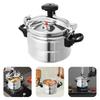
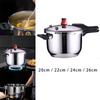
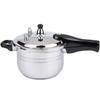
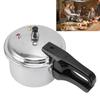
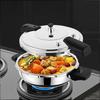
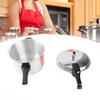
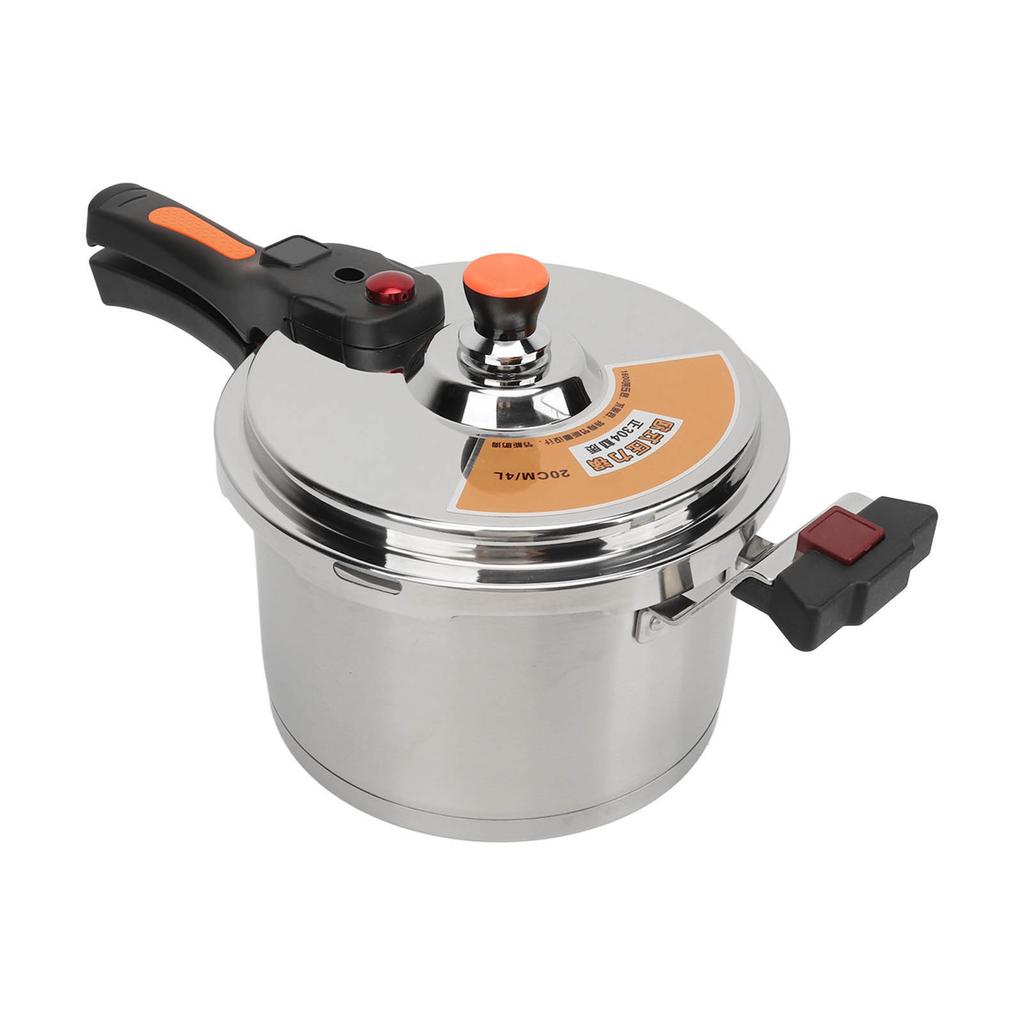
Stainless Steel: Made with excellent materials, this pressure cooker is highly heat resistant, and can withstand harsh environment, ensu lasting quality and durability.
Efficient Cooking: With high pressure cooking, the pressure cooker raises the boiling point of water, significantly reducing cooking time compared to traditional stovetop cooking. It also retains more nutrients in the food. And internal circulation makes the cooking more even.
Multi Functional Design: This pressure cooker can be used for cooking rice, stewing soup, ing, making porridge, and boiling noodles. It offers versatile cooking options for your convenience.
Item Type: Pressure cooker
Material: Stainless steel
Compatible: Induction cooker, gas stove, electric stove, ceramic stove
Pressure: 80kpa
Application: Suitable for food that need time cooking, like whole meat, soup, rice and congee
check:
Before each use, please open the anti blocking and carefully check if the exhaust pipe is unobstructed by shining a light source on the inner side of the lid.
Check if the anti blocking , pressure limiting valve, and valve are clean. If there is any blockage, it must be immediately removed; check if the sealing is in the correct position.
Proper closing of the lid:
When closing the lid, align the down on the lid near the handle with the up on the handle underneath the pot, fasten the lid, and turn the handle clockwise until the upper and lower handles are aligned.
When closing the lid, the bottom of the lid should be parallel to the pot opening, and pressure should be applied evenly around. If unable to close, please refer to the relevant content in the Trouble and solution section, and do not forcibly close it to avoid damaging the components.
Cooling and pressure reduction: Before opening the lid, move the pot away from the heat source. Let the pressure cooker cool naturally at room temperature or forcibly cool it with cold water. Note: Try to avoid immersing the pot in cold water for cooling and pressure reduction, so as not to change the performance of the pot.
Opening the lid:
Before opening the lid, the pressure limiting valve must be removed. Make sure there is no or only a small amount of discharged from the exhaust pipe, and the pressure indicator has returned to its original position. Then, turn the handle counterclockwise, and open the lid when the down on the lid aligns with the up on the handle underneath the pot.
Trouble and solution:
Pressure indicator (stop valve) does not rise: Insufficient power of the stove (increase power), insufficient water in the pot (remove the pot from the heat source, cool it, open the lid, clean and add enough water), unclean stop valve (remove the pot from the heat source, exhaust the , open the lid, and clean the corresponding parts), body or lid not properly closed (align the body and lid, and align the upper and lower handles).
leakage from the underside of the lid: Sealing is not clean (clean the sealing and place it in the correct position), sealing is aging or damaged ( lace the sealing ), lid or body is deformed (send for ).
Soup or rice paste spewing out from the hole of the pressure limiting valve: is too strong (immediately reduce the power), over acity of the food being cooked (follow the acity requirements du use).
Unable to open the lid or difficult to open: There is still pressure in the pot, cannot be opened (must cool down and release pressure), pressure indicator (stop valve) has not fallen (press down the pressure indicator with chopsticks, clean after opening the lid).
Unable to close the lid: First time use (apply cooking oil to the pot opening), lid down not properly aligned with the lower handle up (align the lid down with the lower handle up , apply even pressure and rotate to close), possible deformation due to dropping or colli




 Rimborso per mancata consegna