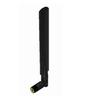
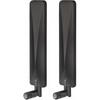
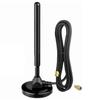
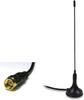
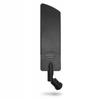
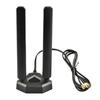
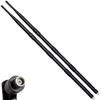
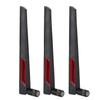
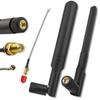
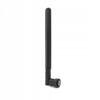
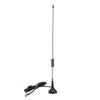
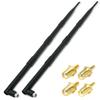
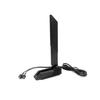
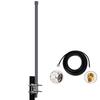
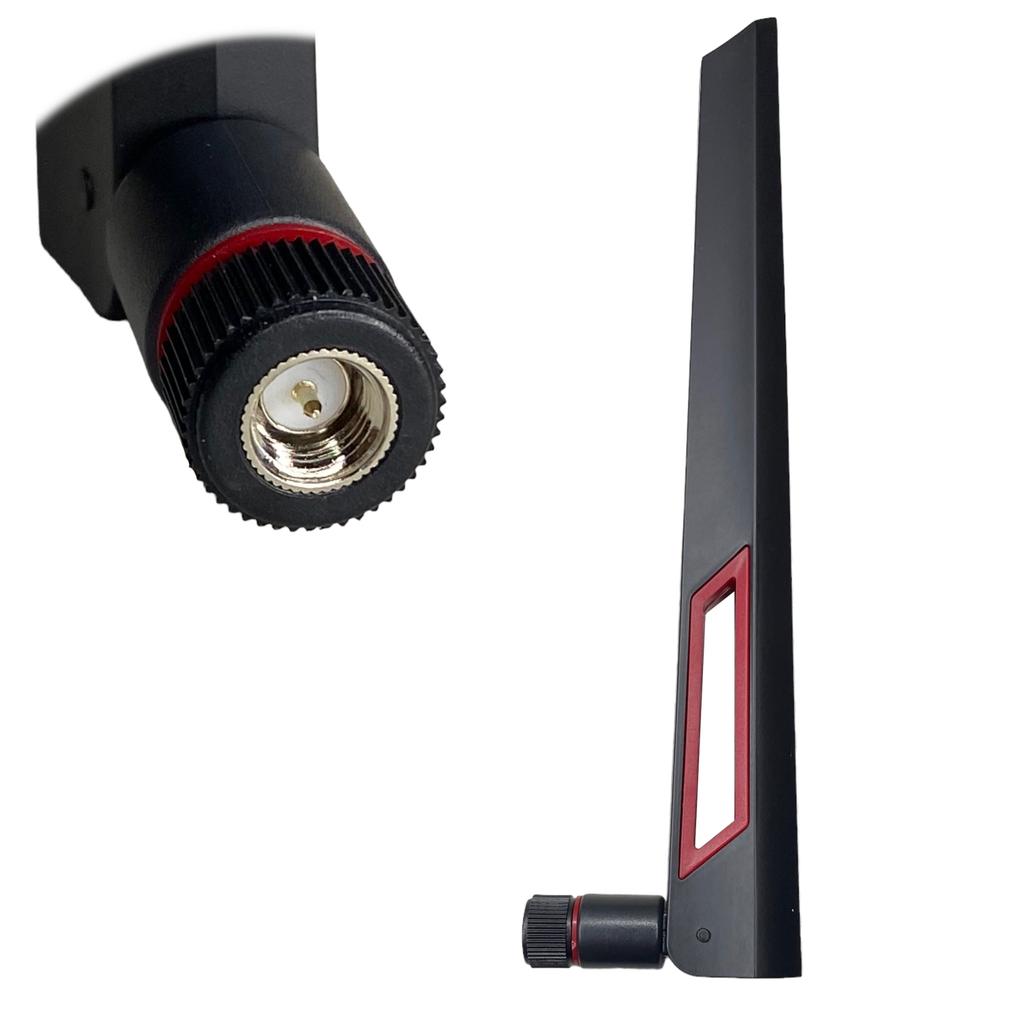
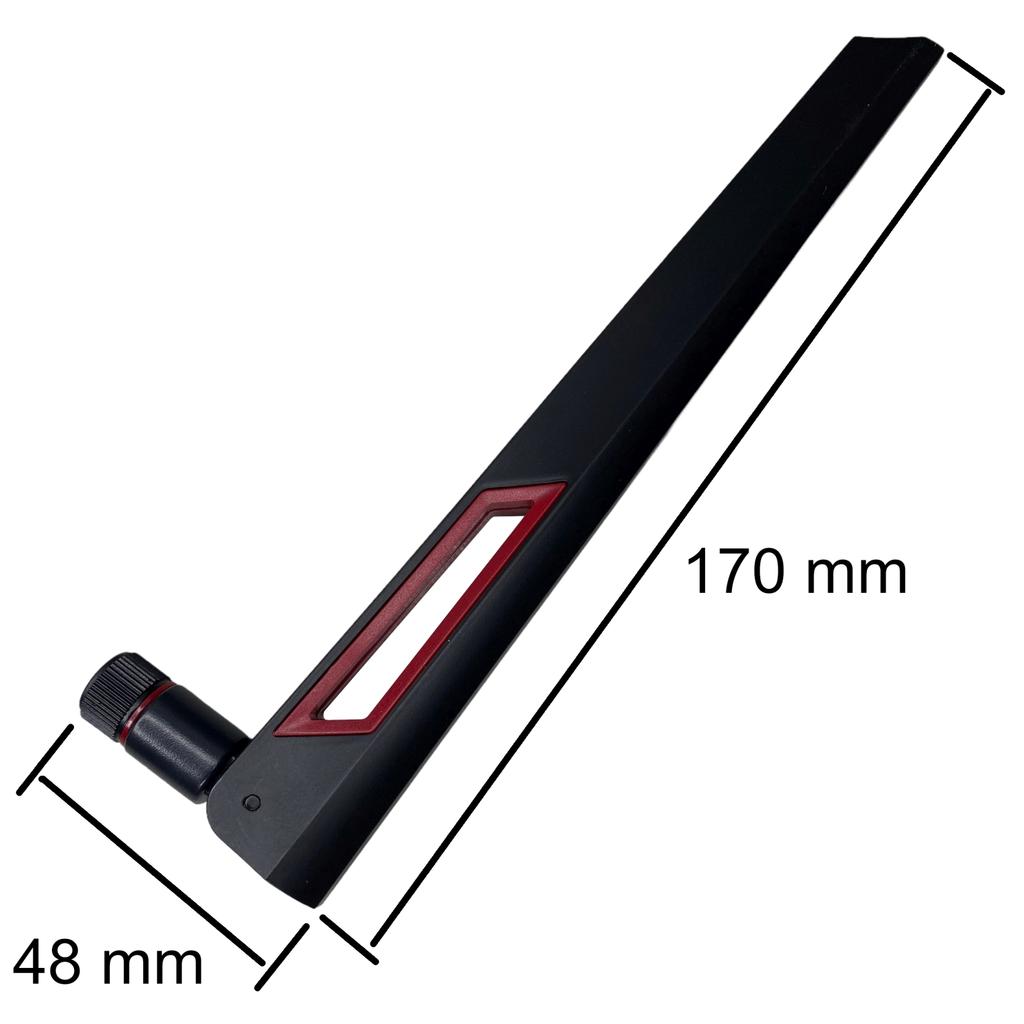
WiFi Antenna 2.4GHz 5.8GHz Dual Band 12 dBi SMA plug Attention: This antenna is NOT intended for WiFi network DEVICES - router, network card, access point!!! Please verify your socket in the device with the photo!!! For the antenna to work with WiFi network devices (routers, access points) they must be equipped with an SMA-RP plug. Application: - smart home, - garage door control systems, - alarm sensors, - cameras, - drones, - remotely controlled devices, - temperature controllers, - radio links, - telemetry, - and others. Placing the antenna outside the housing of the room cleaning device significantly improves the range and stability of data transmission. Specifications: - Frequency: 2.4...2.483GHz, 5.150...5.875GHz, - Antenna gain: 12 dBi, Omni-directional - total for two bands - Impedance: 50 Ω, - Polarization: linear, - Operating temperature: -40...85 °C, - Mounting: to the connector, - Connector type: SMA plug, - Total antenna length: 195 mm, - Antenna length to the hinge: 170 mm, Offer details: - new product, - offer applies to 1 pc. Note: The energy gain of a multi-band antenna is given as the sum of the gains for all component bands. If, for example, an antenna like Dual BandWiFi 2.4/5GHz has a given gain of 8dBi, it does not mean that this gain is for each of the 2.4GHz and 5GHz bands. This division is usually not equal to, e.g., 4dBi and 4dBi. A Dual Band WiFi 2.4/5GHz antenna with 8dBi gain when used only in the 2.4GHz band has actually less gain than a 6dBi antenna dedicated only to this band. Using a Dual Band antenna makes sense when the router simultaneously supports both bands for different users in a different location. In the case of multiband antennas with a very wide operating frequency range, the given gain is significantly higher than for a single-band antenna. The given value the numerical value of this gain has a real dimension only when aggregating bands when setting up a logical connection (5G technology). In the case of connection on a specific channel, the unit gain is lower. To assess the parameters of an antenna, its frequency response should be used. It is necessary to consider whether to use a multiband antenna or dedicated to a specific band. Popular multi-band antennas: - LTE (800, 900, 1800, 2100 and 2600 MHz), - 5G (700 MHz /694 - 790 MHz/ 3.6 GHz /3.4 - 3.8 GHz/ and 26 GHz /24.25 - 27.5 GHz/), - WiFi Dual Band 2.4 GHz (2.400 - 2.485 GHz) and 5 GHz (4.915 - 5825 GHz), - and others.



 Rimborso per mancata consegna