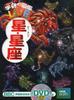
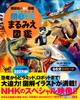
A comprehensive "Stars and Constellations" encyclopedia that can be used for a long time, even up to upper elementary school.
Have you ever seen a sky full of stars?
In "NEO New Edition: Stars and Constellations," we focus on the "real night sky," explaining how to enjoy all 88 constellations with beautiful, newly taken photographs of the night sky. Combined with the easy-to-understand NEO original star chart, we have strived to create the most useful encyclopedia for actual stargazing.
Of course, there are plenty of stories related to stars!
We feature myths close to the original texts written in ancient Greece and Rome, introducing a diverse and new world of Greek mythology. Let's enjoy the Tanabata legend and Night on the Galactic Railroad together with actual stars.
It's also packed with the latest astronomical information and information useful for inquiry-based learning!
We also explain the history of astronomy and calendars around the world, as well as methods of astronomical observation and photography.
The double bonus includes a [Amazing Stars and Constellations DVD (100 minutes)] and a [Special Star Chart] to help with stargazing!
The DVD includes six fun and educational programs, such as "The World's Beautiful Night Skies" where Doraemon and Nobita travel together, interviews with astronomers and planetarium commentators, and songs about the 88 constellations.
Furthermore! The back of the cover features a "Stars and Constellations Grand Collection Poster."
Now, let's look up at the beautiful starry sky that stretches as far as the eye can see!
[Recommendation from the Editor]
We often receive inquiries asking, "What is the difference between 'NEO New Edition: Space' and 'NEO New Edition: Stars and Constellations'?"
While both books focus on space and stars, the main difference lies in their primary perspective. "Space" explores celestial bodies in space, the history of the universe, and rockets and probes that travel to space, while "Stars and Constellations" focuses on methods of observing the night sky from Earth and the relationship between stars and humans (constellations, stories related to stars, cultural events, calendars). "Stars and Constellations" might be easier to tackle as a theme for independent research, as it allows for more hands-on observation. For a deeper understanding and enjoyment, we highly recommend owning both books.
We also frequently receive the question, "How is this different from other constellation guides?"
The defining characteristic of the NEO series is our commitment to authenticity, striving to create the best possible guide for our readers. Therefore, it's a truly comprehensive guide that can be used for a long time.
The "authentic night sky photographs" used for constellation explanations in this book actually took over three years to capture. Because of the difficulty involved, many books nowadays rely solely on CGI for explanations. Why is photography so difficult? One reason is weather conditions. Actual constellations are surprisingly large, requiring a wide area of the sky to be photographed, and you must aim for a moment when there are no clouds. Furthermore, NEO subtly includes mountains, trees, and cityscapes on the horizon to convey the scale of the constellations. This means that the best shots of the constellations rising are only available for a very limited time. If bad weather continues and you miss the opportunity,
![[New Edition] Stars and Constellations with DVD (Shogakukan's NEO 8 Encyclopedia)](https://img.joomcdn.net/f981b621767c76f1295b5cc5f8688885906776d5_original.jpeg)


 Rimborso per mancata consegna