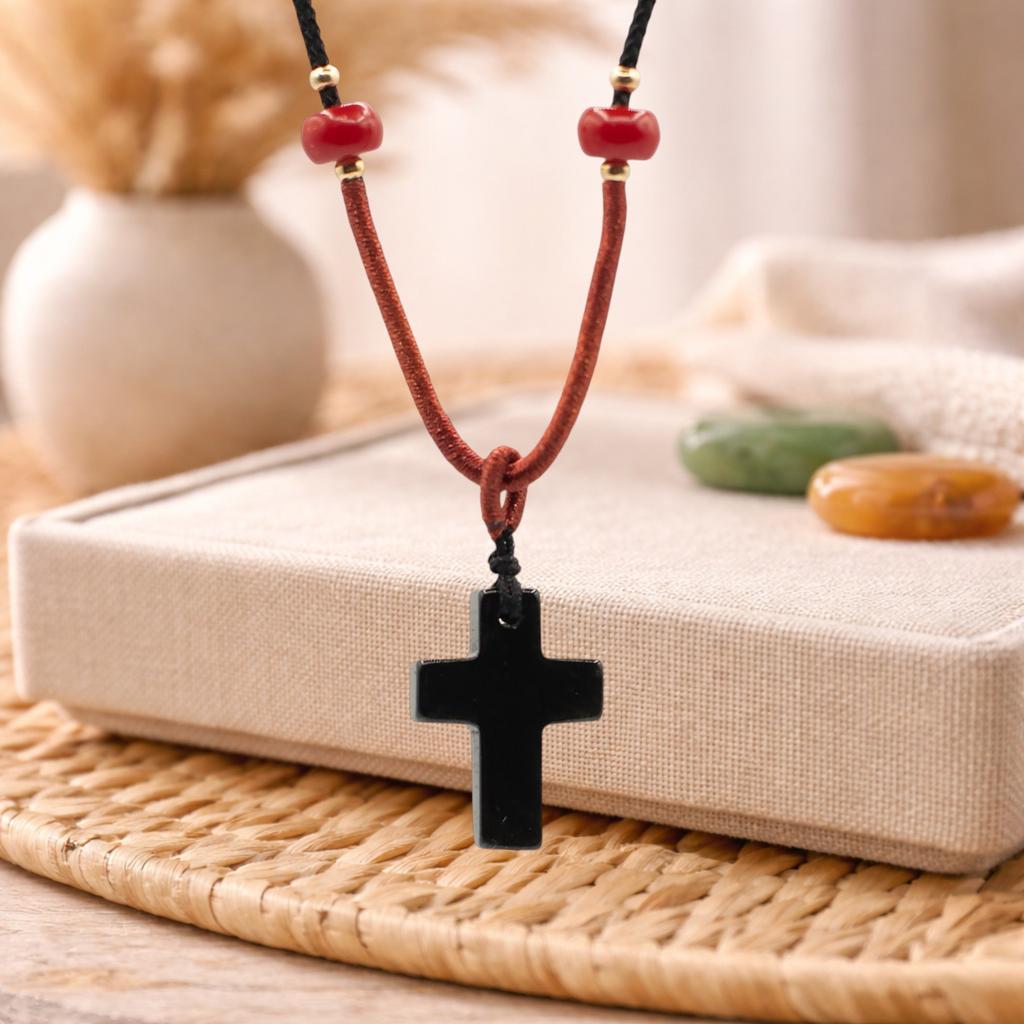
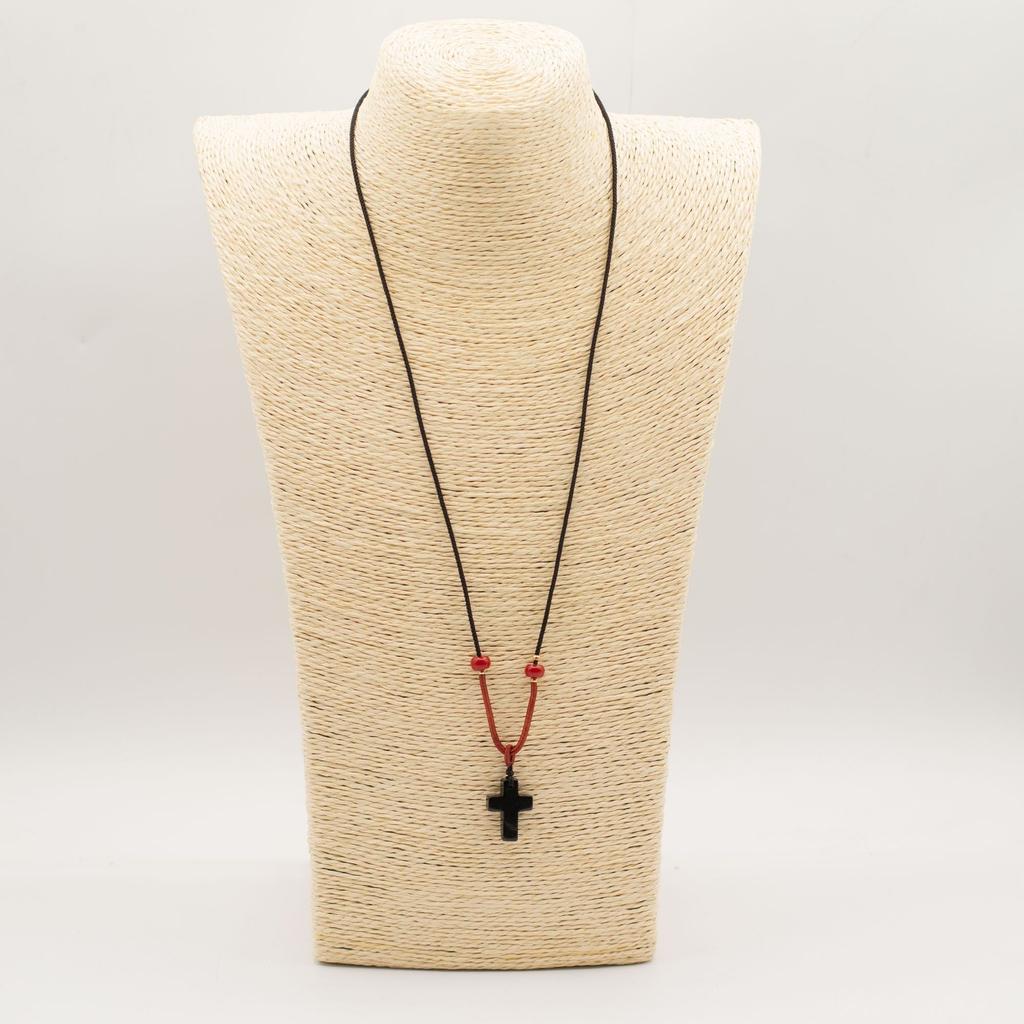
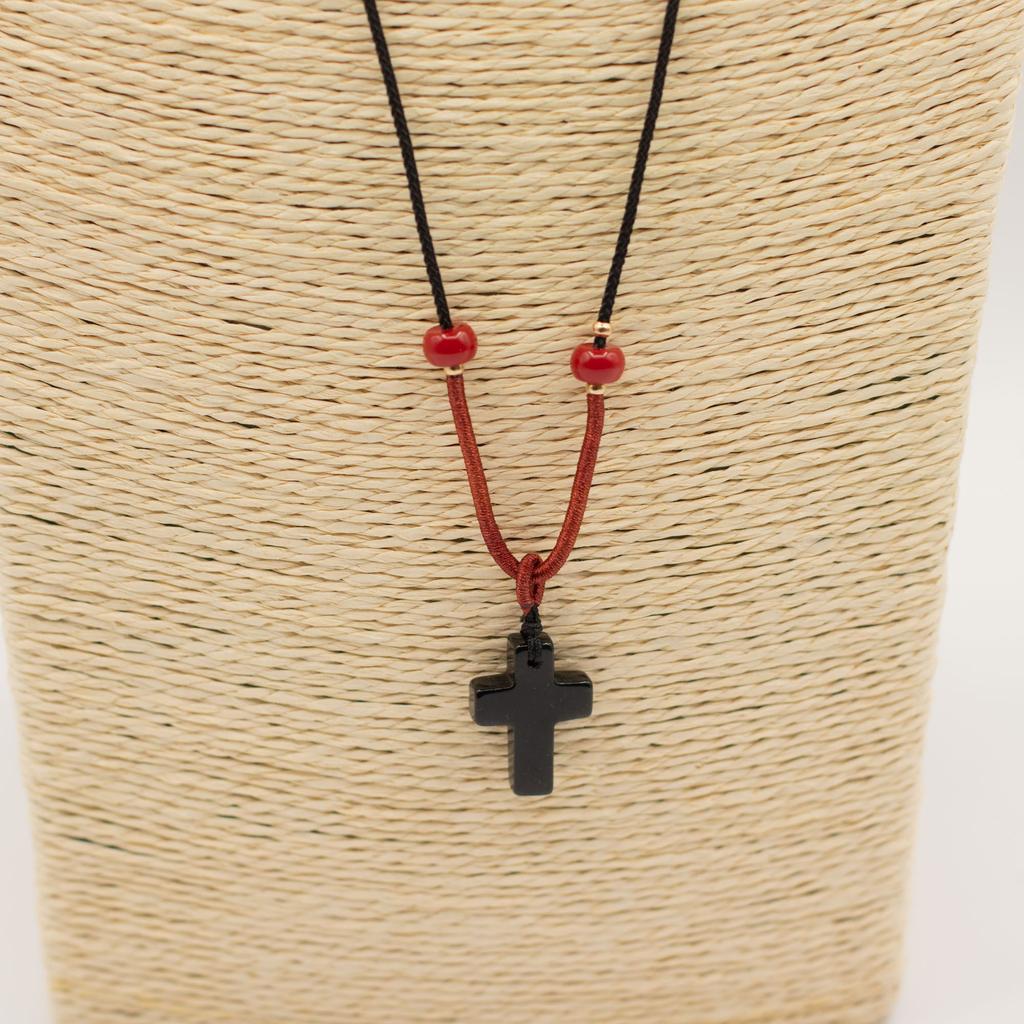
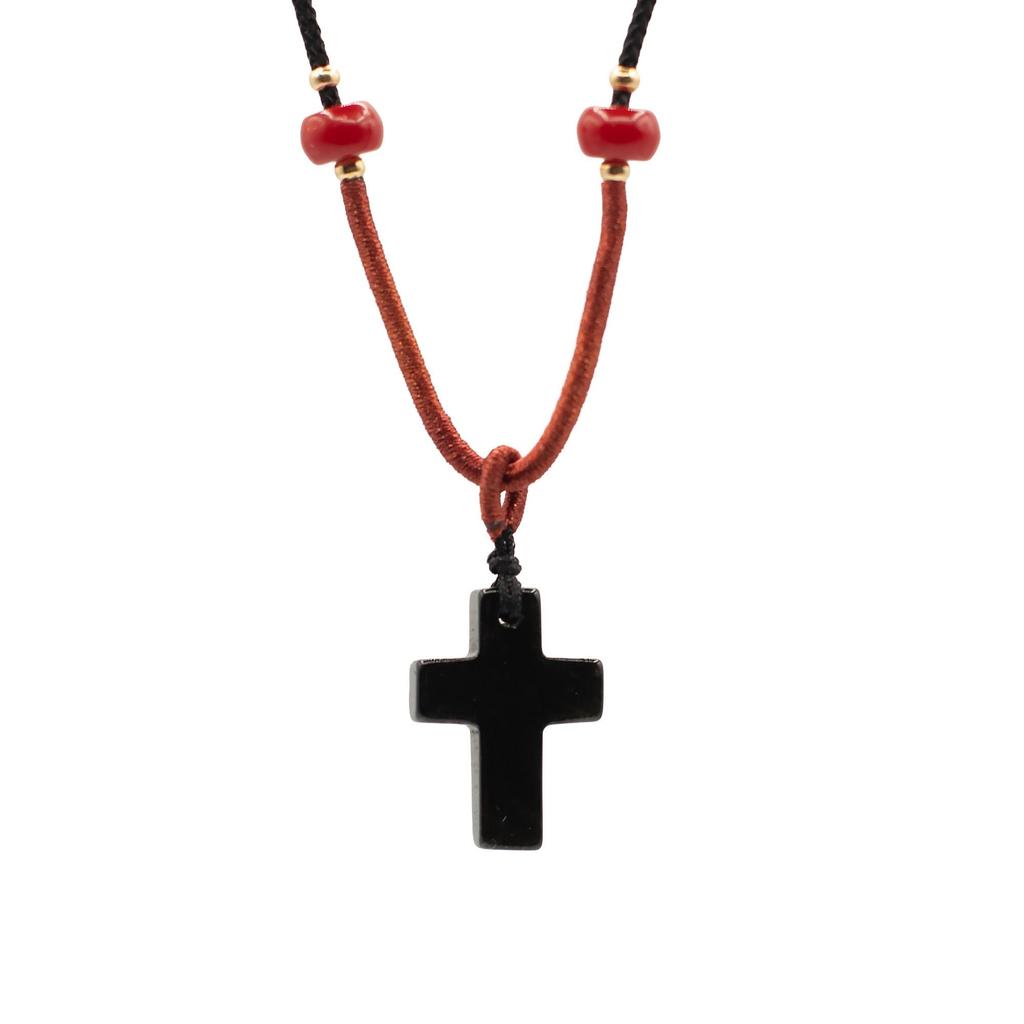
A dark gemstone cross on a simple cotton cord, made to sit close as a quiet centrepiece for everyday wear. The black agate gives the pendant a steady, understated presence, while the cross shape brings a familiar symbol of faith, remembrance and personal meaning.
What draws the eye
The black agate has a calm, deep tone that works easily with soft knits, linen shirts and layered jewellery.
The cross shape feels clear and timeless, visible without being ornate.
The cotton cord keeps the piece relaxed, so it can be worn with casual clothes as well as quieter evening layers.
Its light feel makes it comfortable for regular wear, without pulling at the neckline.
Natural stone brings subtle variation, so each pendant has its own small shifts in surface and character.
Black agate and cotton cord
The pendant is made from genuine black agate, shaped into a classic cross and paired with a cotton cord. The look is simple rather than polished to excess, letting the dark stone and symbolic form carry the piece.
How to wear and keep it
Wear it alone when you want one meaningful detail, or layer it with finer necklaces for a more personal stack. Keep the cord dry where possible, and wipe the gemstone gently with a soft cloth after wear. Store it separately from harder jewellery to help protect the surface.
The meaning behind the form
The cross is most closely associated with Christian tradition, where it represents faith, devotion and remembrance. Worn as jewellery, it can also become a private marker of family, heritage or intention. Black agate has long been associated in crystal traditions with steadiness and grounding, making this a thoughtful piece for someone drawn to simple symbols and darker stones. The meaning stays personal: some wear it for belief, some for memory, and some for its quiet visual strength.
Size and details
Made from gemstones and cotton, with a total weight of 5 g. Origin: China.
A thoughtful gift
A considered choice for someone w…
region of manufacture: China


 Rimborso per mancata consegna
![[Onoma] Onm Ciondolo in Legno Croce Decorativa Colore Marrone Gioielli Fatti a Mano (36155479)](https://img.joomcdn.net/4bf7acefef898713153f45f60f798906f9457742_100_100.jpeg)



![Collana con Ciondolo Acciaio Inossidabile 60cm Nero con Scatola Regalo Croce Fascia Gesù [SERASAR] da Uomo -](https://img.joomcdn.net/147fd35d9643ed6c0c44c1b392bb3c47186d5a6a_100_100.jpeg)





![Collana con Ciondolo Acciaio Inossidabile 60cm Nero con Scatola Regalo Croce Fascia Gesù [SERASAR] da Uomo -](https://img.joomcdn.net/0cadd76412e6ce379d7255d5bc2565af5ab37455_100_100.jpeg)
![[OrecchieColloMani] Collana Choker in Velluto Nero con Linee Incrociate Color Block (S5633065)](https://img.joomcdn.net/0e70868f40c4940a0eff417422a5953cacf0b932_100_100.jpeg)