[JOOM Certified Store]
A Japan-based retailer offering high-quality authentic products.
*** Important Notices (Please Read) ***
We carry a wide variety of products, but please note that many are based on Japanese domestic standards.
- [Home Appliances]: Voltage 100V / Type A plug. (A voltage converter or plug adapter may be required).
- [Games & Media]: May be subject to region locking. Manuals and user interfaces are primarily in Japanese.
* Please check for compatibility with your equipment before purchasing.
* See the bottom of the page for detailed product specifications.
[Shop Information]
- Please "Follow" our store and leave a 5-star review!
―・―・―・―・―・―・―・―・―・―・―・―・―
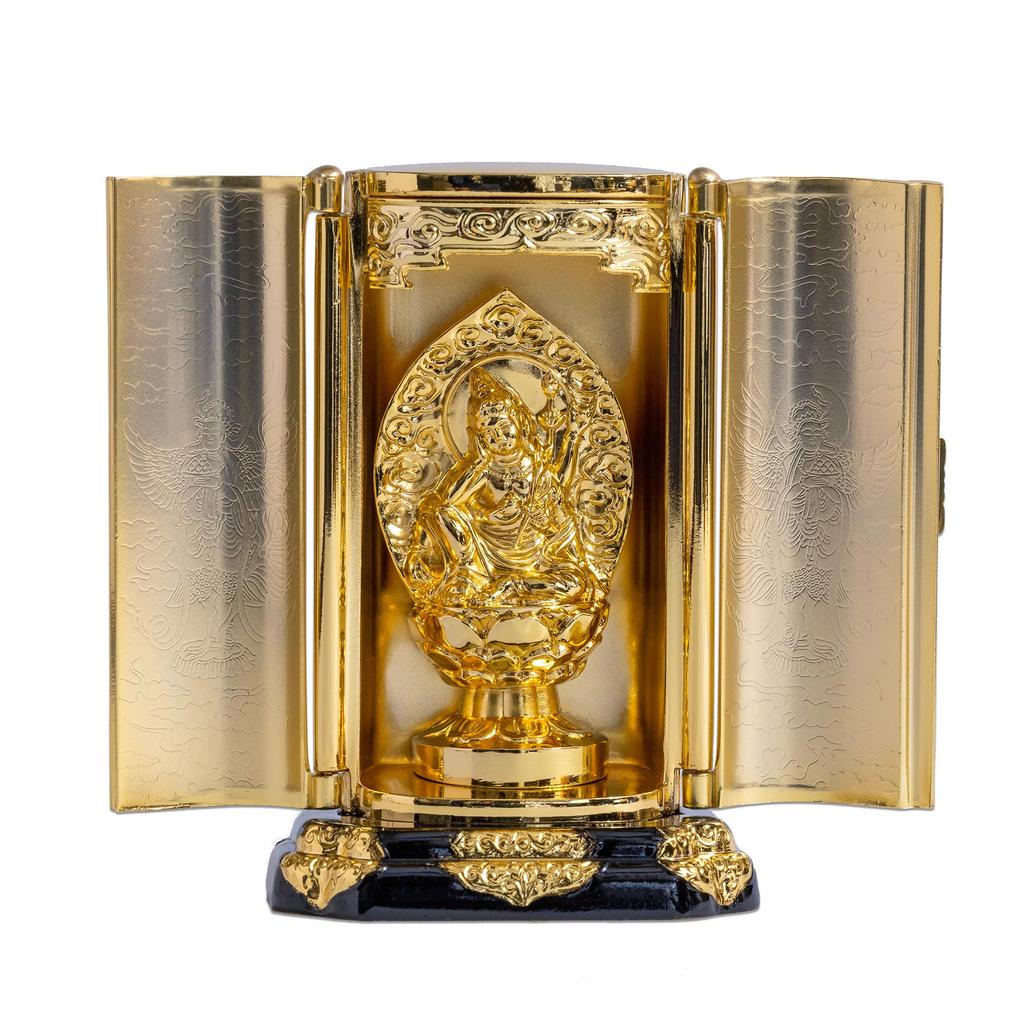
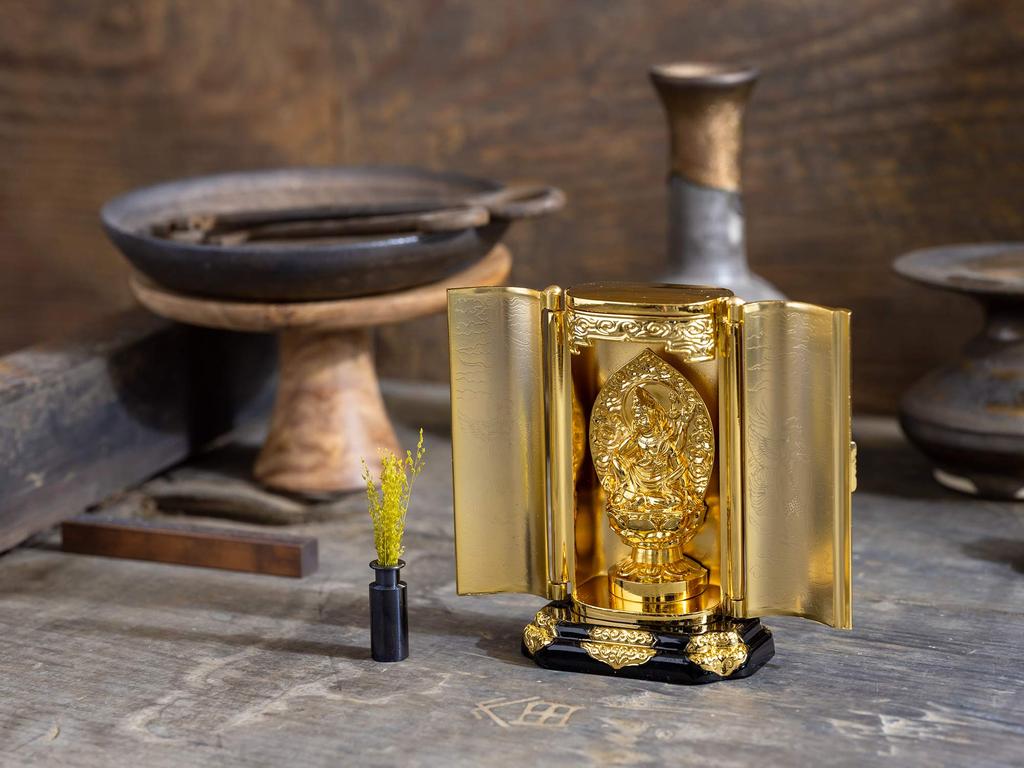
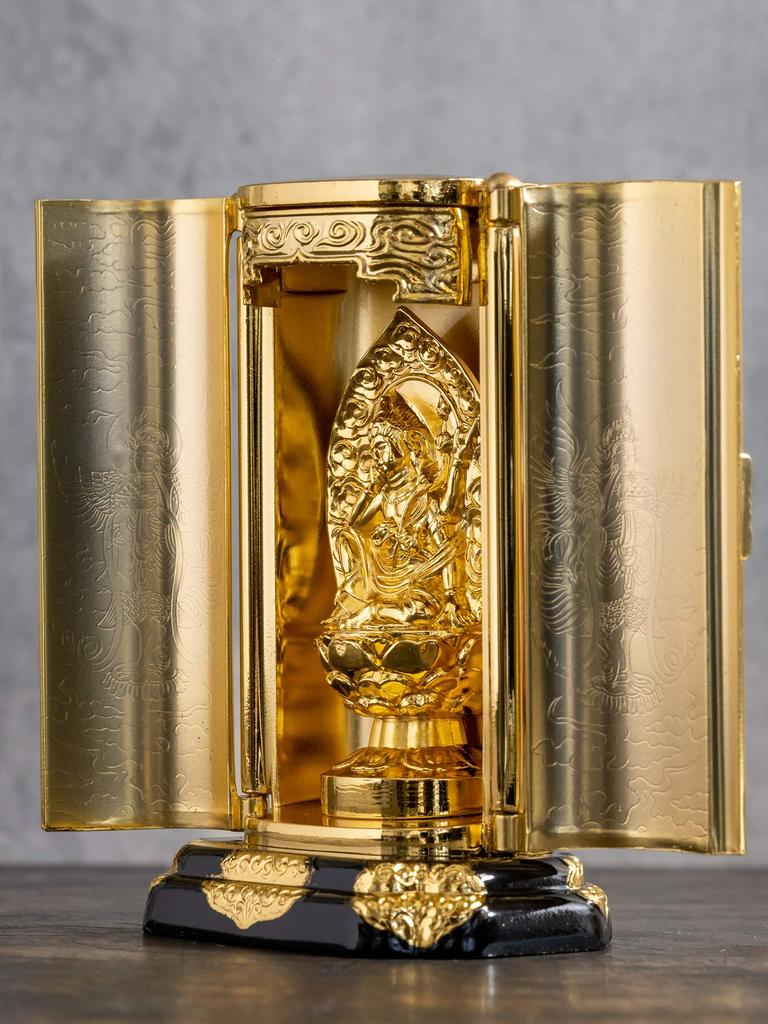
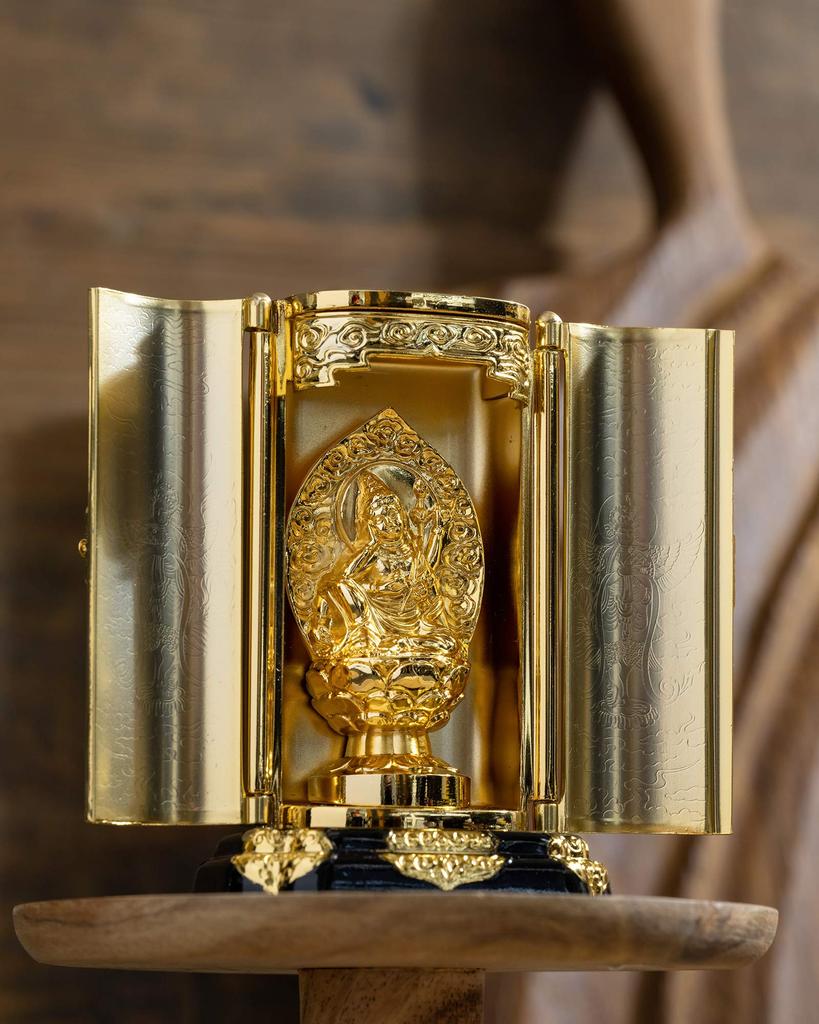
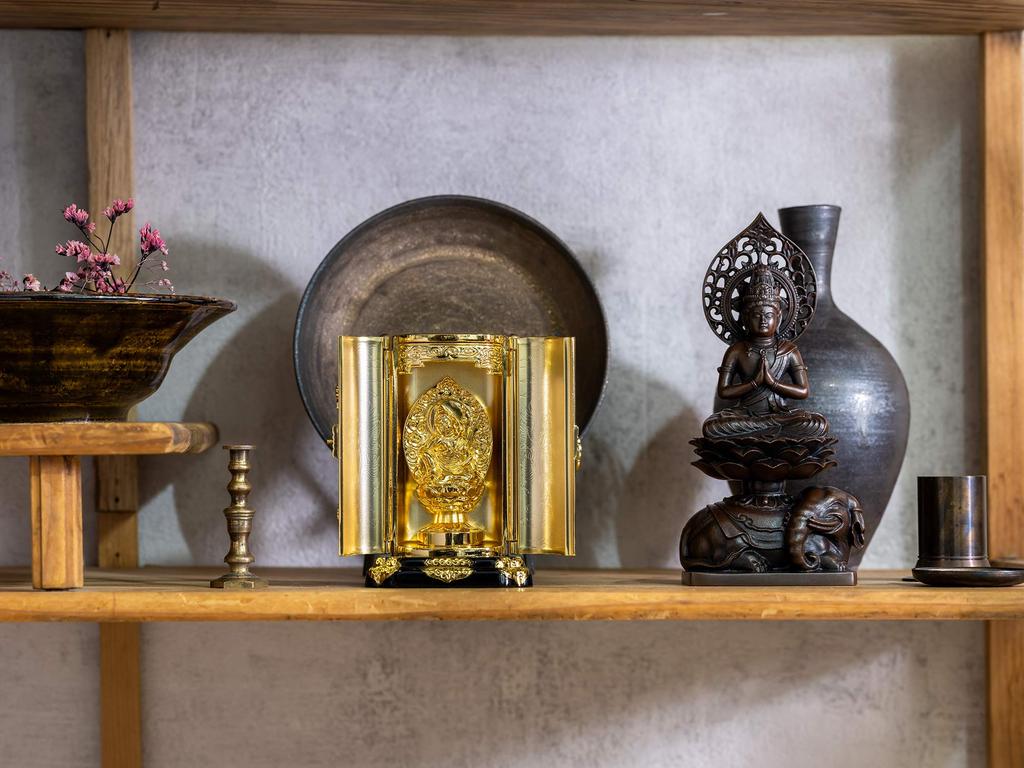
Series: Guardian deity (pure gold plated) with shrine, approximately 10 cm. Includes a shrine that allows you to enshrine a Buddha statue even in a small space.
Body size: H 9.7 x W 6.5 x D 4.3 cm (shrine) Weight: 410 g [Buddha statue size: H 6.5 x W 3.5 x D 1.7 x H 3.2 cm]
Material: Alloy with pure gold plating finish [Takaoka Copperware / Made in Japan] ◆Product Contents: Buddhist statue, shrine, gift box
This is a Japanese-made metal Buddha statue. It is sized to be enjoyed in daily life as a tasteful piece of interior decor or as a source of comfort.
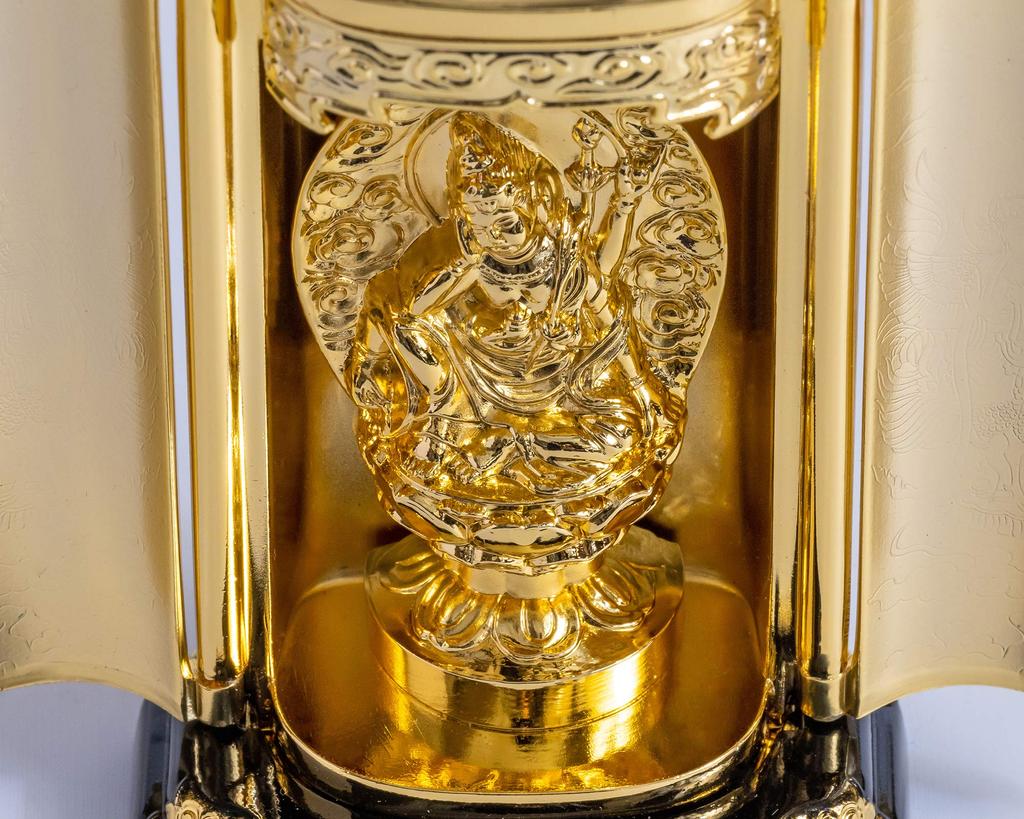
■Nyoirin Kannon Bodhisattva - Kannon Bodhisattva who saves people from suffering and grants all wishes. "Nyoirin" refers to the wish-granting jewel called the Nyoirinhoju, which brings wisdom, wealth, and good fortune at will, and "rin" refers to the Dharma wheel that destroys worldly desires. Kannon Bodhisattva holds these two in his hands, so he is called Nyoirin Kannon. Counted as one of the Six Kannon, he is said to save those who have lost their way in the realm of heaven, but his six arms are also said to extend a helping hand to all six realms. Although he was the last of the Henkei Kannon to appear, faith in him spread during the Nara period, and he has been believed to protect people from disasters and illness. This Buddha statue is usually one-faced and six-armed, and is seated on a lotus pedestal in an unusual position, with his right knee raised and the soles of his feet together on the wheel throne. In addition to the Nyoirinhoju and Dharma wheel that give him his name, he typically holds a lotus flower. The first hand on the right is touching his cheek in a contemplative position, as if he is thinking about how to save all living beings.The statue was originally created in esoteric Buddhism, and is said to have been introduced to Japan by Kobo Daishi in the early Heian period.




 Rimborso per mancata consegna