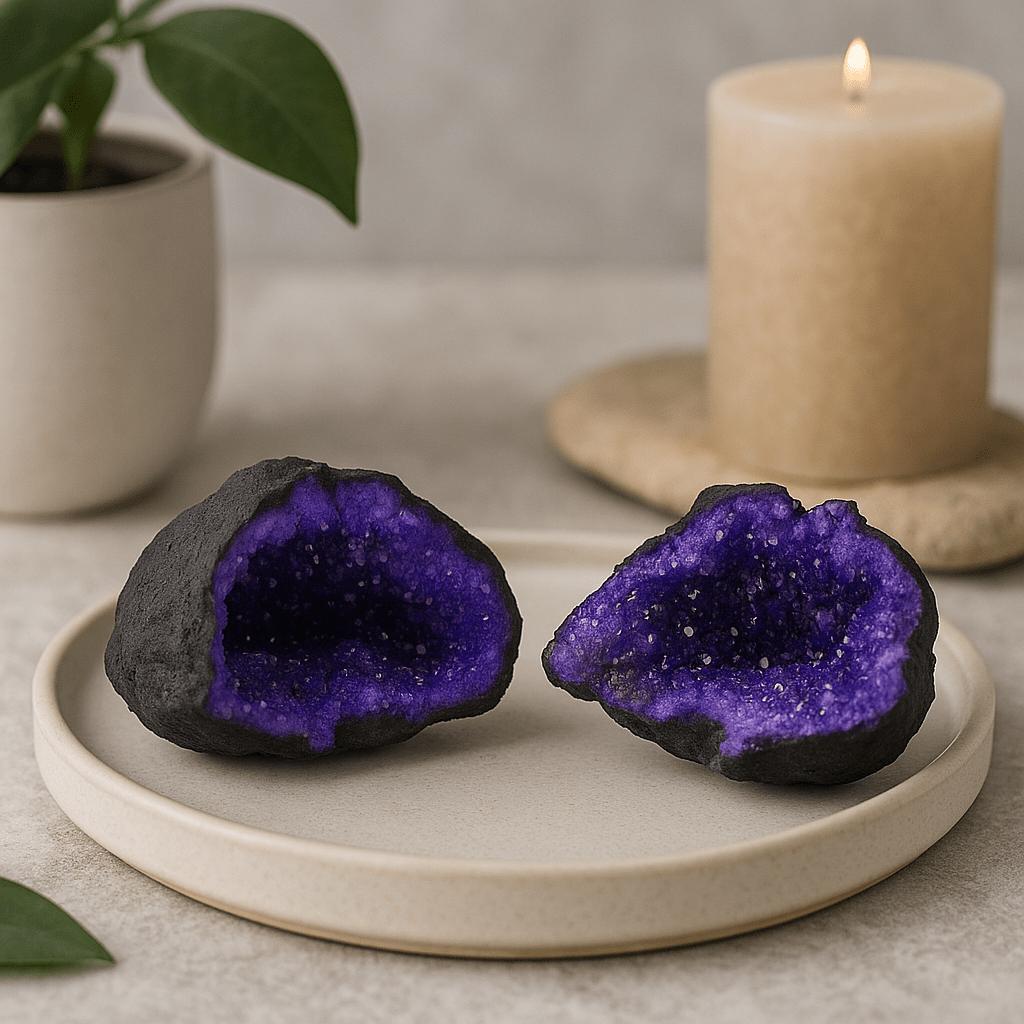
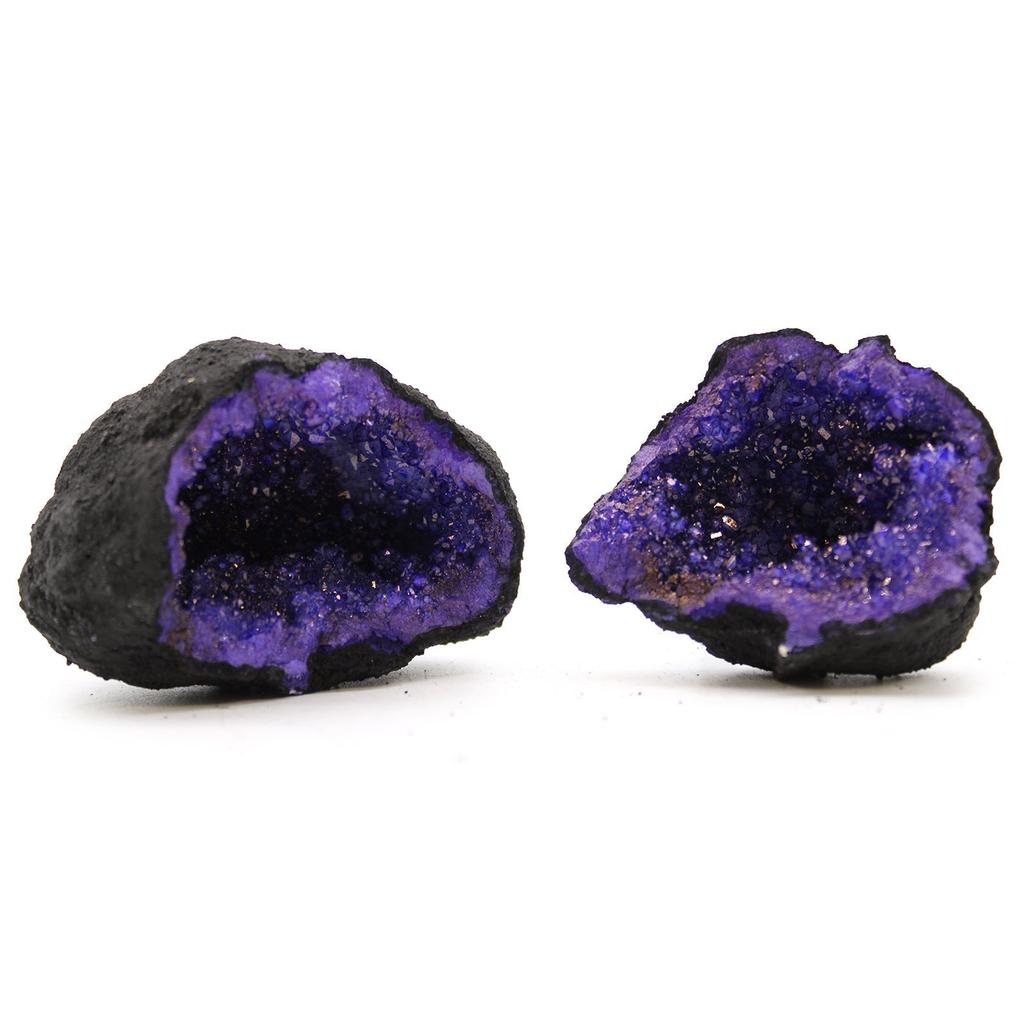
A painted calcite geode has the feeling of a small geological reveal: plain rock outside, crystalline light within. This Moroccan geode is coloured in turquoise or purple, so the open face becomes part mineral specimen, part decorative object, with the natural crystal formation still giving each piece its own character.
What the opened geode reveals
The hollow centre draws the eye inward, where crystals have formed across the inner surface.
The painted colour gives the piece a stronger decorative presence than an uncoloured geode.
Each one is naturally different, with its own crystal density, cavity shape and edge formation.
It suits a shelf, desk or small display space where the open face can catch the light.
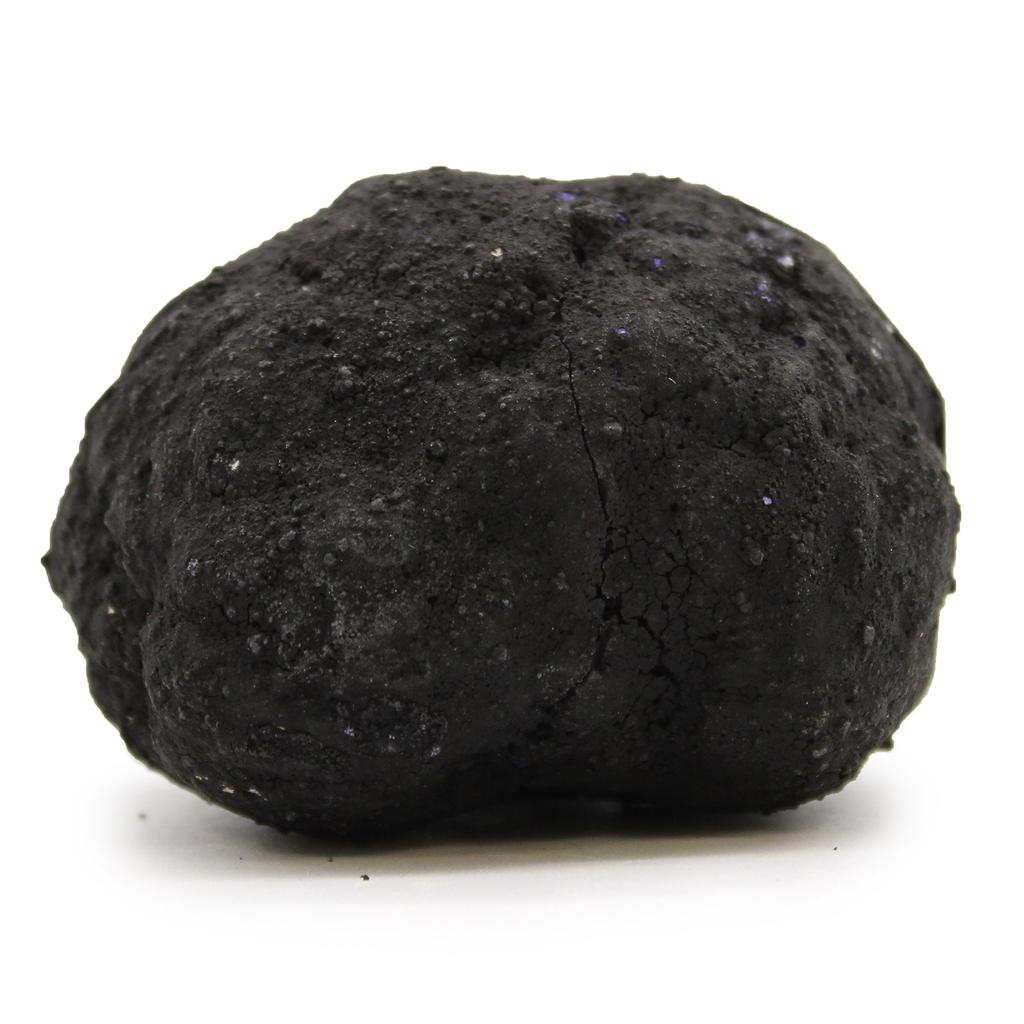
The contrast between rough outer stone and coloured crystal interior gives it that satisfying split-open Earth feeling.
Calcite and selenite from Morocco
This piece is made from calcite and selenite, with a painted crystal interior. Geodes form when hollow spaces in stone slowly fill with mineral-rich water, allowing crystals to grow inward over a long crystallisation process. The result is never perfectly repeatable, which is part of the appeal.
Where it sits well
Place it where the open face can be seen rather than tucked flat against a wall. It works beautifully among books, beside a candle holder, on a bedside table, or as a small point of colour in a calm display of stones and natural objects.
How to care for the crystal surface
Keep it dry and away from bathrooms or damp rooms. Selenite is a soft form of gypsum, so water and humidity can dull, cloud or damage it over time.
Do not wash or soak it. If dust gathers, use a dry soft cloth or a gentle brush, and avoid scraping the crystal surface.
Why geodes feel so compelling
The word ‘geode’ comes from the Greek for ‘earth-like’, a fitting name for a stone that keeps its drama hidden until opened. Unlike a solid crystal cluster, a geode has a sense of surprise built into it: the outs…
region of manufacture: Morocco


 Rimborso per mancata consegna


![Ametista Naturale Attentamente Alto Cristallo Viola Grezzo Guarigione Feng [TANAKA YA] Grappolo, Pietra, Selezionato, Qualità, Circa. 11510785mm, Peso Appross.](https://img.joomcdn.net/7ee338c9c4f8c53a6e7bb24b070113554c29999a_100_100.jpeg)
![Ametista Naturale Selezionato con Cura Naturale Grezzo Feng Buona Fortuna [TANAKA YA] Grappolo, 100% Quarzo, Pietra di Alta Qualità, Circa. 947557mm, Peso](https://img.joomcdn.net/696c7b35918a13b149bc28473fc1c57f227cda8f_100_100.jpeg)