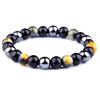
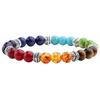
A bracelet of faceted gemstone beads joined with magnetic clasps — small polished stones in a spectrum of colours, each catching the light differently. The magnetic closure means no fumbling with tiny catches; bring the ends near each other and they pull themselves closed. Slip it on before heading out or wear it layered with others.
The stones and the spectrum
Faceting multiplies what plain beads do with light — each angled surface throws a different gleam as the wrist turns. The rainbow sequence here runs warm to cool and back again, the kind of small detail that registers more over time than all at once. The stones themselves are left unnamed in the supplier's record, common enough with mixed-strand work where the sequence matters more than the mineralogy.
Magnetic closure
Small cylindrical magnets embedded in the metal ends handle all the work of fastening. Bring them within a centimetre or so and they snap together with a clean pull; twist gently to release. It removes the need for a third hand and makes the bracelet practical for anyone whose dexterity is limited or who simply prefers things that behave themselves.
Common questions
Will the magnets stay closed during normal wear?
Yes. The magnetic pull is strong enough to hold through daily movement — typing, carrying bags, lifting a cup — but releases cleanly with a deliberate twist. Sharp yanking or catching the bracelet on something may separate it, the same as any jewellery.
Are the stones natural or treated?
The record does not specify treatment, which is standard for mixed-colour strands. Faceted gemstone beads at this price point are typically dyed or heat-treated to intensify or stabilise colour, a centuries-old practice across lapidary traditions.
Who should avoid wearing magnets?
Anyone with a pacemaker, insulin pump, or other implanted medical device. Magnets can interfere with their function. If in doubt, ask your clinician before wearing magnetic jewellery.
region of manufacture: China


 Rimborso per mancata consegna





![[PIETRA D'ORO] Bracciale in Pietra Naturale Pietra Potente, Occhio di Tigre AAA, Terahertz, Accessorio da Uomo, Diametro Interno: circa. 17,5 centimetri](https://img.joomcdn.net/c309dd4dcb329dc85c2c87c5d6f6941dd2365b93_100_100.jpeg)