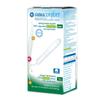
Masmi Regular organic tampons, made from organic cotton, are specially designed for light and normal discharge, as well as for use in the final days of menstruation.
Their safety for women's health is obvious, as even the cotton from which they are made is grown without the use of chemicals.
Tampons do not contain chlorine and dioxin at all – a highly toxic product of the bleaching process.
Another advantage of Masmi tampons is the absence of viscose, the fibers of which have a tendency to stick to the body.
The hypoallergenic nature of the tampons guarantees the absence of irritation and allergies.
They do not contain fragrances and absorbent gel – this is another plus of organic feminine intimate hygiene products.
The rounded shape of the applicator ensures comfortable tampon insertion.
Thanks to their natural composition, the tampons are 100% biodegradable in natural conditions, causing no harm to the environment.
Individual biodegradable packaging in natural conditions ensures additional hygiene and allows you to always have tampons with you individually (in the handbag).
Attention: always use tampons with the lowest absorbency that meet your needs to avoid Toxic Shock Syndrome (STSh). Method of use: wash your hands, remove the applicator from the wrapper, relax. Hold the applicator between your thumb and middle finger.
Insert the twisted tip of the tampon into the vaginal opening, directing it towards the lower back.. After filling the tampon, pull the cord to remove it.
Composition:
Organic cotton.
Interesting to know
Facts about the menstrual cycle that will surprise you Just a few centuries ago, women had about 160 menstruations in their entire lives because they were pregnant or breastfeeding most of the time. With the development of contraception, the situation changed drastically.
A modern woman experiences more than 450 cycles. In ancient times, many superstitions were associated with menstruation.
Ancient Romans believed that menstruating women were dark witches who could stop hail and lightning, as well as destroy crops.. In the Middle Ages, Europeans believed that menstrual blood could cure leprosy. The nun Hildegard of Bingen even wrote a medical treatise about it.
Ancient Egyptians used papyrus as tampons, ancient Greeks used a piece of wood, and ancient Romans made pads and tampons from wool.. And here are the latest studies on this topic.
You may experience nosebleeds during your period. Your voice can change during menstruation. Menstruation is more painful in the cold season.
But whatever the perceptions of menstruation may be, in one thing we can be 100% sure - the use of natural feminine hygiene products made from organic cotton significantly reduces the risk of irritation in the delicate area for women.
Mode of application:
Wash your hands, remove the tampon, straighten the removal string, and pull it sharply.. Insert the tip of your index finger into the base of the tampon. Carefully spread the labia with the fingers of your free hand. Relax and gently insert the tampon deeper into the vagina, directing it towards your lower back.. After filling the tampon, pull the cord to remove it.


 No-delivery refund